
Packing for a ski holiday can be daunting—especially since you need to balance bulky technical gear with everyday essentials that keep you comfortable off the slopes.
This guide breaks down the everyday items you’ll need to ensure your mountain getaway is as smooth as a freshly groomed run.
"This post contains affiliate links. If you make a purchase through these links, we may earn a commission at no extra cost to you."
1. Skincare & Health: The Altitude Essentials
The combination of high altitude, reflective snow, and freezing wind can be harsh on your body.
- High-SPF Sunscreen (SPF 30+): Even on cloudy days, UV rays are significantly stronger at high altitudes. Don’t forget your chin and the underside of your nose—the sun reflects off the snow!
- SPF Lip Balm: Standard lip balm won’t cut it. Look for one with UV protection to prevent “mountain burn” and painful chapping.
- Heavy-Duty Moisturizer: The mountain air is incredibly dry. Bring a rich cream for your face and hands to use every evening.
- Small Medical Kit: Include painkillers (for those inevitable “first-day” muscle aches), blister plasters (ski boots can be unforgiving), and hydration salts to combat altitude-related headaches.
2. On-Slope Accessories: The Comfort Kit
Beyond your skis and jacket, these small items make a massive difference during your 6 hours on the mountain.
- A Small Rucksack: A 10–20L pack is perfect for carrying your water, snacks, and extra layers. Ensure it has a waist strap so it doesn’t bounce while you ski.
- Reusable Water Bottle or Hydration Bladder: It is very easy to get dehydrated in the cold. A bladder with an insulated tube is best to prevent freezing.
- High-Energy Snacks: Keep protein bars, nuts, or chocolate in your pockets for a quick energy boost on the chairlift.
- Microfiber Goggle Cloth: Crucial for wiping away fog or snow without scratching your expensive lenses.
3. Après-Ski & Evening Wear
You’ll spend about half your holiday out of your ski gear. The key here is “Mountain Casual.”
- Snow Boots or Sturdy Walking Shoes: You need something with a deep tread and waterproof lining. The resort streets are often icy and slushy.
- Swimwear: Do not forget this! Almost every resort has a spa, sauna, or heated outdoor pool. It’s the best way to recover after a day of skiing.
- Indoor Slippers: Most chalets and hotels have a “no shoes” policy. Bring cozy slippers or thick “slider” sandals to wear indoors.
- Polarized Sunglasses: While you’ll wear goggles to ski, you’ll want sunglasses for lunch on the sunny terraces or walking around town.
4. Technical “Everyday” Gear
- Portable Power Bank: Cold weather drains phone batteries significantly faster. A small power bank is a lifesaver if you’re using GPS apps like Fatmap or Strava.
- Travel Plug Adapters: If you’re traveling to the Alps or North America, remember your adapters for all your gadgets.
- Hand Warmers: Disposable or rechargeable warmers can be slipped into gloves or boots on particularly “arctic” mornings.
Pro Packing Tip: The “Wear It” Rule
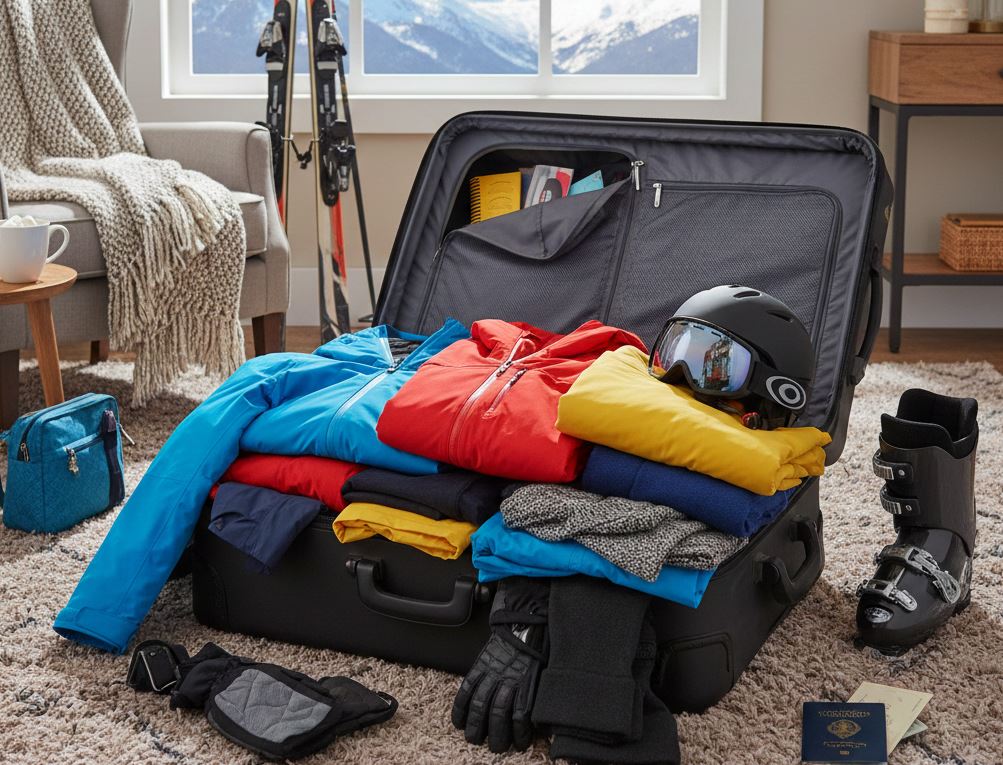
Ski jackets and boots are incredibly bulky. To save luggage space (and avoid over-weight baggage fees), wear your heaviest ski jacket and your walking boots on the plane. You can always use the jacket as a pillow during the flight!