
Deep Vein Thrombosis (DVT) is a serious condition that occurs when a blood clot forms in a deep vein, usually in the legs. While the risk for healthy individuals on short flights is very low, long-haul travel (typically defined as 4 hours or more) creates a “perfect storm” for circulation issues.
Why Flying Increases DVT Risk
The primary reason for travel-related DVT is immobility. When you sit for hours in a cramped airplane seat, your calf muscles—which normally act as a “pump” to push blood back up to your heart—stay still.
- Blood Pooling: Without muscle contraction, blood can stagnate in the lower legs.
- Compression: The edge of the airplane seat can press against the back of your knees, further restricting blood flow.
- Dehydration: Low cabin humidity and alcohol consumption can thicken the blood, making it more prone to clotting.
- Low Oxygen: Reduced cabin pressure may trigger a natural clotting response in some individuals.
"This post contains affiliate links. If you make a purchase through these links, we may earn a commission at no extra cost to you."
How Compression Socks Help Deep Vein Thrombosis (DVT)
Compression socks (often called flight socks) are designed with “graduated compression.” This means they are tightest at the ankle and gradually get looser as they move up the leg.

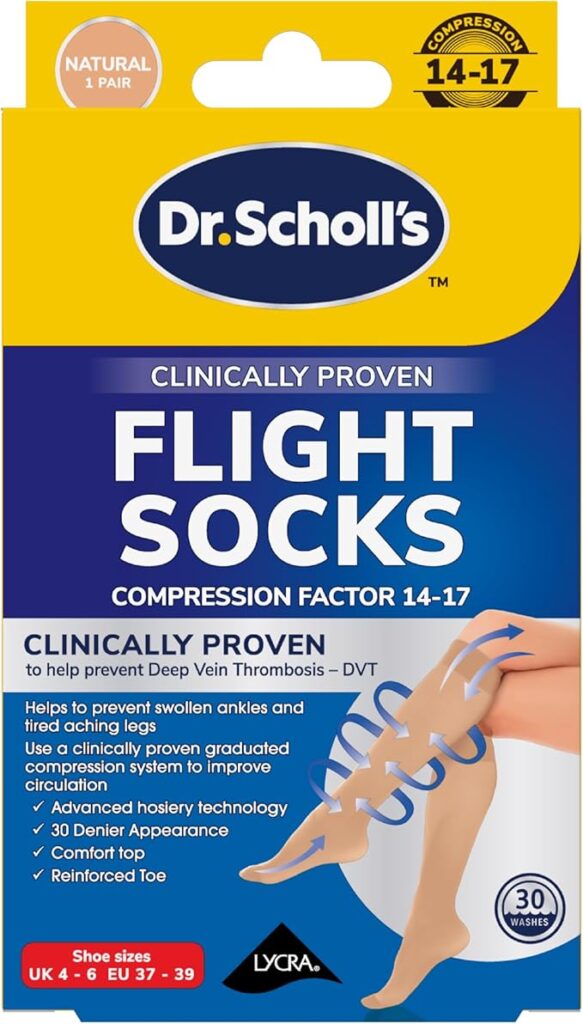
- Promotes Upward Flow: The pressure squeezes the vein walls together, which helps the valves in your veins work more effectively to move blood against gravity.
- Prevents Stretching: It keeps the veins from over-expanding, which reduces the “pooling” of blood.
- Reduces Swelling (Edema): By keeping fluids moving, the socks prevent that “heavy” feeling and the visible swelling many people experience after landing.
- Evidence: Research (including a major Cochrane Review) provides “high-certainty evidence” that wearing compression stockings significantly reduces the risk of symptomless DVT in airline passengers on long-haul flights.
Best Practices for Using Compression Socks
To get the most benefit, follow these guidelines:
- Choose the Right Grade: For most travelers, 15-20 mmHg (mild to moderate) compression is sufficient. If you are at high risk, a doctor may recommend 20-30 mmHg.
- Proper Fit is Vital: Ensure they are not too tight behind the knee, as this can actually block circulation. They should be snug but never painful.
- Put Them On Early: Put your socks on before you board the plane, as they can be difficult to pull on in a cramped cabin seat.
- Knee-High is Best: Below-knee socks are generally more comfortable and just as effective as thigh-high versions for travel.
Other Deep Vein Thrombosis (DVT) Prevention Tips
- Ankle Pumps: Every 30 minutes, flex your feet up and down or rotate your ankles in circles to engage the calf muscles.
- Hydrate: Drink plenty of water and limit alcohol and caffeine, which contribute to dehydration.
- Walk: If the seatbelt sign is off, take a short walk up and down the aisle every hour or two.
- Avoid Crossing Legs: This can further restrict blood flow through the veins.
Note: If you have a history of blood clots, recent surgery, or are pregnant, you should consult your doctor before your trip, as they may suggest prescription-grade stockings or medication.