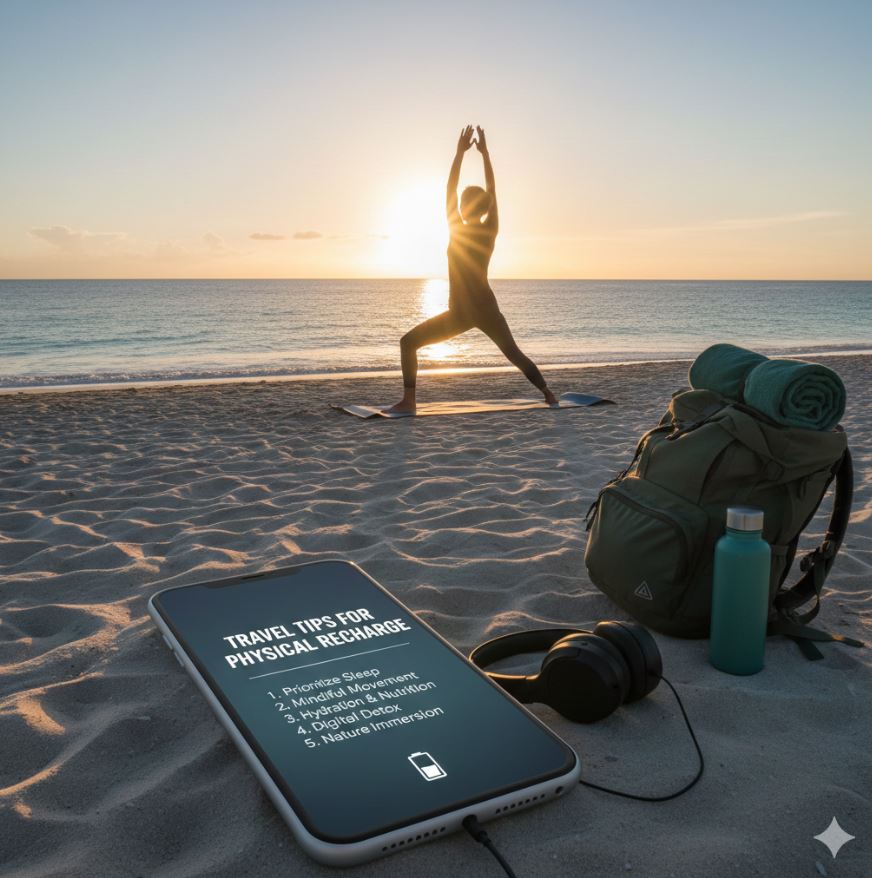
In a world of “go-go-go” tourism, it is easy to return from a vacation feeling more exhausted than when you left. A true physical recharge isn’t just about sitting still; it’s a strategic blend of restorative movement, nutritional discipline, and environmental changes that reset your nervous system. Whether you are planning a dedicated wellness retreat or just want to survive your next sightseeing marathon, here are the best travel tips for a total physical recharge.
1. Prioritize “Circadian Management“
Your body’s ability to repair itself depends on the quality of your sleep. Travel often disrupts this through jet lag or unfamiliar environments.
- The 24-Hour Buffer: If possible, arrive at your destination a day before you “start” your itinerary. Use this time solely for napping and adjusting to the local sun cycle.
- The “Sunlight Anchor”: Get 15 minutes of direct sunlight as soon as you wake up. This anchors your cortisol levels and signals to your brain that the day has begun, helping you sleep more deeply that night.
- Pack a “Sleep Kit”: Don’t rely on hotel curtains. Bring a high-quality silk eye mask, earplugs, and a small travel-sized pillow spray (lavender or cedarwood) to create a consistent sensory environment.
2. Master the Art of “Joyful Movement”

A physical recharge doesn’t mean being a couch potato. It means replacing “stressful” movement (rushing through airports) with “restorative” movement.
- Zone 2 Exploration: Instead of sprinting between landmarks, aim for long, steady walks at a pace where you can still hold a conversation. This “Zone 2” cardio flushes lactic acid and boosts circulation without spiking stress hormones.
- The 5-Minute Morning Stretch: Before you even leave your room, do 5 minutes of “cat-cow” stretches or deep lunges. This counters the physical stiffness caused by airplane seats or soft hotel mattresses.
- Swim or Soak: If your accommodation has a pool or nearby natural water, use it. Hydrotherapy—even just 15 minutes of treading water—takes the pressure off your joints and provides a unique form of muscle relaxation.
3. The “Plus-One” Hydration Strategy
Dehydration is the #1 cause of travel fatigue and “brain fog.”

- The Strategy: For every coffee or alcoholic drink you have, consume one full bottle of water with electrolytes. Standard water often lacks the magnesium and potassium needed to actually hydrate your cells when you’re active and sweating in a new climate.
- Avoid “Heavy” Lunches: Large, carb-heavy meals mid-day can trigger a “food coma” that ruins your afternoon energy. Aim for high-protein, high-fiber lunches (like salads with grilled fish or local beans) to keep your energy stable.
4. Curate Your Environment
Where you stay dictates how you recover.
- Nature Over Neon: Research shows that “Forest Bathing” (simply being near trees) significantly lowers heart rate and blood pressure. Choose accommodations near parks, water, or mountains rather than the heart of a noisy city center.
- Digital Boundaries: Physical tension often manifests from mental stress. Set a “Digital Sunset”—no phones after 8:00 PM—to allow your brain to enter a parasympathetic state (rest and digest) before bed.
5. Build a “Post-Travel Buffer”
The biggest mistake travelers make is returning on a Sunday night and working on Monday morning.
- The “Re-Entry Day”: Always schedule one “nothing” day at home before returning to work. Use this day for laundry, grocery shopping, and—most importantly—re-hydrating in your own space. This prevents the “vacation crash” and ensures the benefits of your recharge actually stick.
Comparison: Sightseeing vs. Recharging
| Feature | Sightseeing Focus | Physical Recharge Focus |
| Pace | High-intensity, “see it all” | Slow, intentional, “feel it all” |
| Transport | Subways, Taxis, Buses | Walking, Biking, Leisurely Trains |
| Dining | Quick bites, street food | Farm-to-table, nutrient-dense |
| Goal | Collecting memories | Restoring energy |