
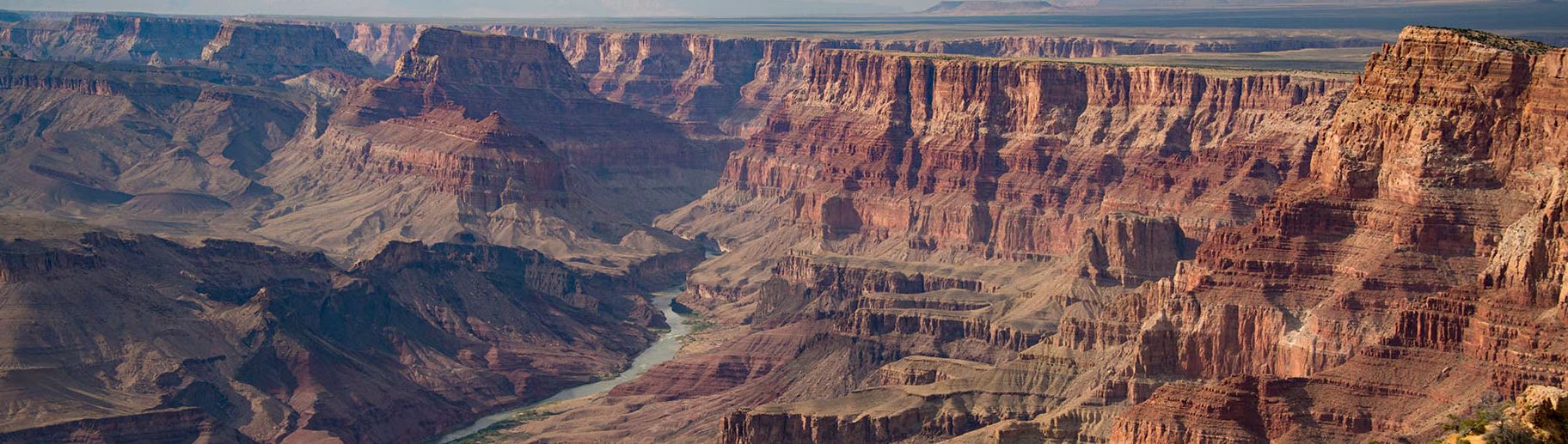
Carved over millions of years by the Colorado River, the Grand Canyon in Arizona is an immense geological masterpiece.
The Grand Canyon measures roughly 446 kilometers long, up to 29 kilometers wide, and nearly 2 kilometers deep. Designated a national park in 1919, it attracts approximately six million visitors annually to witness its multi-layered rock formations that reveal billions of years of history.
Choosing Your Rim
The park is primarily divided into two main areas, each offering a distinct experience:
- South Rim: Open year-round and the most popular choice for first-time visitors. It is highly developed with numerous lodging, dining, and accessible viewpoints like Mather Point, Yavapai Point, and Desert View Watchtower.
- North Rim: Located about 1,300 feet higher in elevation than the South Rim, this area is quieter, cooler, and more forested. It is seasonal, typically open from mid-May to mid-October, and offers expansive views from points like Bright Angel Point and Cape Royal.
- West Rim: Outside the national park but famous for the Grand Canyon Skywalk, a horseshoe-shaped glass bridge extending 70 feet over the edge.
Top Activities and Experiences
Whether on land, water, or in the air, there are endless ways to explore the canyon’s scale:
- Hiking and Biking: The Rim Trail on the South Rim is flat and mostly paved, making it ideal for easy walking. For those seeking a challenge, the Bright Angel and South Kaibab trails descend deep into the canyon.
- River Adventures: Experience the canyon from below by rafting the Colorado River. Trips range from one-day smooth water cruises to multi-day whitewater expeditions.
- Aerial Tours: Helicopter and fixed-wing airplane flights provide a “bird’s-eye view,” revealing the true enormity of the landscape.
- Mule Trips: A historic way to travel, mule rides are available on both rims, with some journeys descending to the canyon floor or staying along the rim.
Essential Travel Tips
- Best Time to Visit: To avoid peak summer crowds and extreme heat, consider visiting between March and May or September and November.
- Weather and Gear: Temperatures vary wildly; it can be 40°C on the canyon floor in summer while remaining significantly cooler on the rim. Wear layers and comfortable, sturdy shoes.
- Stargazing: As an International Dark Sky Park, the canyon offers world-class stargazing opportunities with exceptionally clear views of the Milky Way.
- Wildlife: Keep an eye out for resident species like bighorn sheep, mule deer, coyotes, and the rare California condor.