If you’re seeking a getaway that trades hotel minibars for medieval masonry and WiFi for stained-glass morning light, look no further than Champing. A portmanteau of “church” and “camping,” this unique British hospitality trend allows travellers to spend the night in historic, often redundant churches across England and Wales.
Launched in 2014 by the Churches Conservation Trust (CCT), Champing has evolved from a pilot project at All Saints’ Church in Aldwincle to a nationwide phenomenon with nearly 30 locations. By 2024, the initiative had hosted over 10,000 guests, offering a “sleepover with soul” that doubles as a vital conservation effort.
The Champing Experience: What to Expect
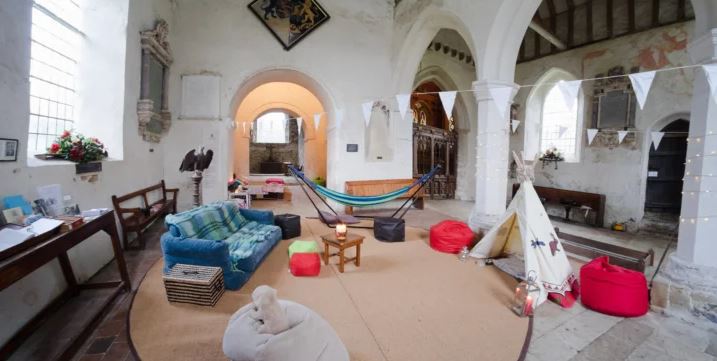
Unlike traditional camping, you won’t need to pitch a tent. The CCT and their local volunteers—affectionately known as “Church Mice”—prepare the space for your arrival.
- Accommodations: You’ll typically find camp beds, folding chairs, and lanterns set up in the nave or side aisles.
- Amenities: Expectations must be managed; these are ancient structures, not luxury boutiques. While some churches offer “glamping” features like flushing toilets and kitchenettes, most provide basic “dry” loos and bottled water.
- Exclusive Use: One of the biggest draws is that you get the entire building to yourself. Once you turn the heavy iron key in the lock, the history of the walls is yours to explore in total privacy.
Why People are “Snoozing in the Pews”
Recent research from the University of Brighton highlights that Champing is driving a new model of sustainable tourism. Beyond the novelty, guests are drawn by:
- Heritage Preservation: Every stay helps fund the upkeep of these Grade I and II listed buildings, many of which cost upwards of £50 a day just to keep the doors open.
- Well-being and “Slow Travel”: Visitors frequently describe the experience as “tranquil,” “magical,” and a “sanctuary” from modern life.
- The “Church Mouse” Welcome: Local volunteers often leave thoughtful touches, from hot water bottles and fairylights to tips on the best local pubs.
Top Champing Destinations for 2026
The official Champing season generally runs from April to October, though select locations like Lewes (East Sussex) and Limpenhoe (Norfolk) now offer year-round stays.
| Location | Highlights |
| All Saints, Aldwincle | The birthplace of Champing; a 13th-century gem in Northamptonshire. |
| St Mary’s, Edlesborough | A hilltop church in Buckinghamshire with medieval woodwork and 800 years of history. |
| St Cuthbert’s, Holme Lacy | Mentioned in the Domesday Book (1086), located on the beautiful River Wye. |
| St Nicholas, Berden | A “glamping” option in Essex featuring hot running water and a flushing loo. |
| All Saints, Langport | Famous for its “Hunky Punks” (gargoyles) and Somerset’s largest collection of medieval stained glass. |

Champing™ is the unique concept of camping overnight in historic churches, brought to the world by The Churches Conservation Trust, the national charity protecting historic churches at risk.
Tips for Your First Stay
- Layer Up: Historic churches are notoriously “ambient” (read: chilly). Even in summer, bring warm layers and thick socks.
- Bring Entertainment: Without a TV, it’s the perfect time for board games, reading, or even trying your hand at the church organ if available.
- Check the “Champ-lav”: Facilities vary wildly. Check the specific church listing to see if you’ll have a flushing toilet or a composting “Eco-loo” tucked in the churchyard.
- Embrace the Atmosphere: Whether you’re a history buff, a spiritual seeker, or just looking for a quirky story, there is something profoundly grounding about waking up to the sun streaming through a 500-year-old window.
By choosing a night in a pew over a night in a generic hotel, you aren’t just a tourist—you’re a modern pilgrim helping to ensure these architectural treasures stand for another thousand years.