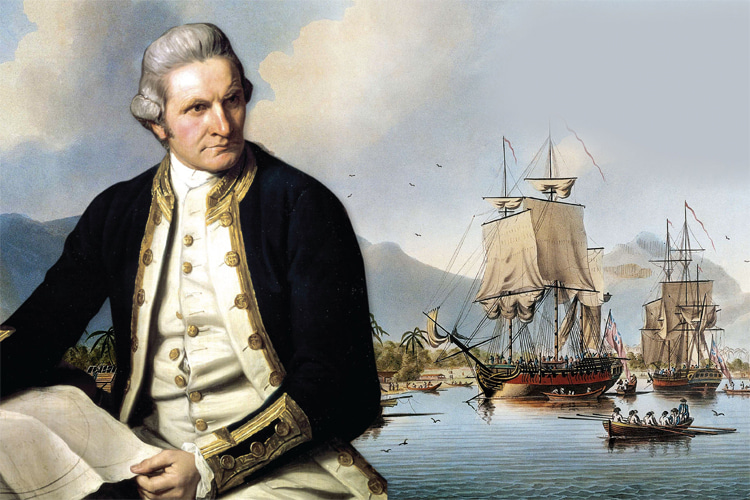
Captain James Cook was far more than a typical 18th-century sailor; he was a master navigator, cartographer, and mathematician who transformed the map of the world.
While many of his contemporaries relied on guesswork and tradition, Cook approached the ocean with the rigor of a scientist. Over the course of three historic voyages, he successfully charted the vast and often treacherous waters of the Pacific Ocean, providing the first accurate European maps of New Zealand, the eastern coast of Australia, and the Hawaiian Islands. His legacy is defined by several key contributions to maritime history: * Scientific Precision: Using early versions of the marine chronometer, he solved the “longitude problem,” allowing him to determine his east-west position with unprecedented accuracy. * Health and Hygiene: Cook was a pioneer in naval medicine; by enforcing a strict diet including sauerkraut and citrus, he famously kept his crew free from scurvy, a disease that had decimated sailors for centuries. * The Search for the “Southern Continent”: He sailed further south than any European before him, crossing the Antarctic Circle and proving that the fabled “Terra Australis Incognita” (a massive, habitable southern continent) did not exist in the temperate zones. Cook’s journals and charts remained the gold standard for Pacific navigation for over a century, marking the transition from the era of “discovery” to the era of scientific exploration. Would you like me to dive deeper into the specific technologies he used on his ship, the HMS Endeavour?
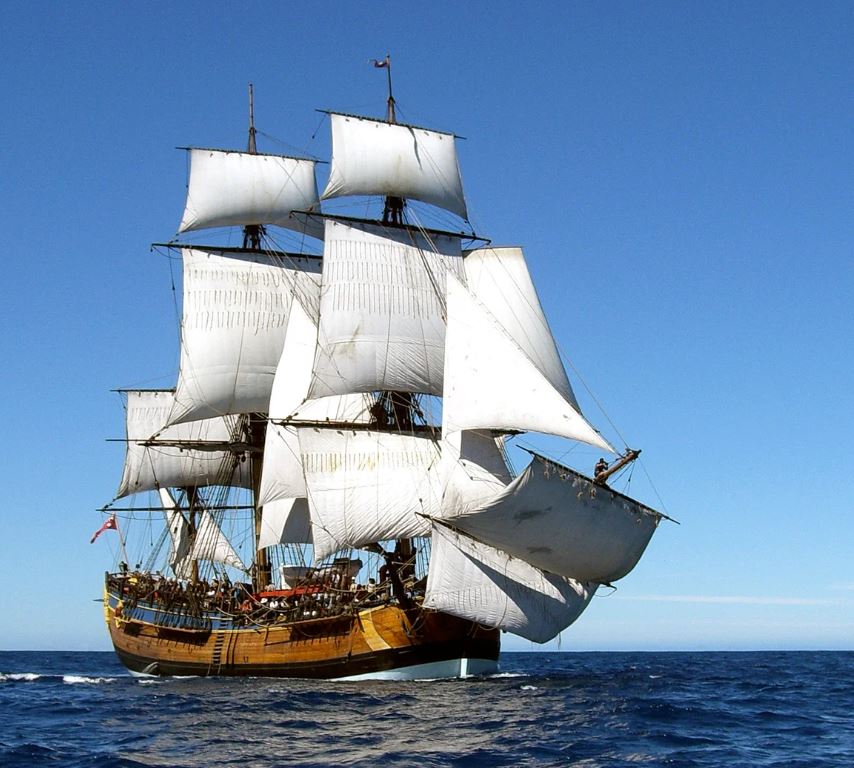
Captain James Cook used a variety of 18th-century scientific, navigational, and maritime technologies on the HMS Endeavour (1768–1771). The ship itself was a refitted Whitby collier chosen for its sturdy, flat-bottomed design, which was ideal for coastal exploration.
Key technologies used on the Endeavour included:
Navigational and Surveying Instruments
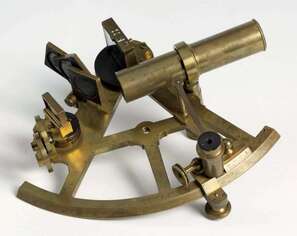
- Sextants: Cook used these to measure the angle between the horizon and the sun or stars to calculate latitude.
- Quadrants and Backstaffs: Earlier tools used for observing the altitude of celestial bodies to find latitude.
- Astronomical Observations/Lunar Distance Method: To calculate longitude, astronomer Charles Green used a 1-foot reflector telescope and data from the Nautical Almanac to measure distances between the moon and stars, a method known as “lunar distances”.
- Azimuth Compass: Specialized compasses designed to measure the magnetic bearing of celestial bodies to determine compass error.
- Plane Table and Surveying Instruments: Used by Cook to create accurate coastal charts. He likely used a foldable brass-hinged plane table frame to plot mapping data on-site.
- Chronometer (Concept): While Cook did not have a reliable sea-watch on his first voyage (like the later Kendall K1), he and Green relied on the aforementioned lunar methods to check time, paving the way for testing proper chronometers on later voyages.
Scientific and Research Equipment
- Sea Still: A device used to convert salt water into fresh drinking water, which was critical for maintaining the health of the crew.
- Astronomy Equipment: A special observatory was set up on deck to observe the transit of Venus in 1769, involving telescopes and portable transit instruments.
- Naturalist Equipment: Joseph Banks brought specialized equipment, including a stove, tinder box, reflecting candle lamp, and specialized collecting containers for plant and animal specimens.
Shipboard and Defensive Technology
- Armament: The Endeavour was equipped with ten 4-pounder cannon and twelve swivel guns to protect against hostile natives.
- Ballast: Twelve tons of pig iron were loaded to ensure stability.
- 28 Hand-stitched Sails: The ship had a, mostly, square-rigged setup designed for durability.
Note: While Cook did not carry Harrison’s successful chronometer on the first voyage, he famously used the lunar distance method to calculate longitude accurately.