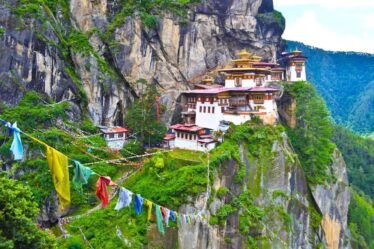
Jutting out from Norway’s northwestern coast like a spine of prehistoric granite, the Lofoten Islands lie well north of the Arctic Circle. Despite this high latitude, warmed by the remnants of the Gulf Stream, Lofoten defies expectations of barren polar ice. Instead, visitors encounter razor-sharp alpine peaks plummeting vertically into mirror-calm fjords, white-sand beaches washed by turquoise seas, and centuries-old wooden fishing settlements clinging to rocky skerries.
The Legacy of the Skrei and Red Rorbuer
For over a millennium, Lofoten’s lifeblood has been the winter cod fishery (Lofotfisket). Every January to April, millions of migrating Arctic cod (skrei) travel south from the Barents Sea to spawn in Lofoten’s sheltered coastal waters:
- The Architecture of Fishing: Traditional wooden cabins—rorbuer—were originally built on stilts over tidal rocks to house traveling fishermen during treacherous winter months. Painted in iconic deep red (originally a cheap mixture of cod liver oil and ochre) or yellow, many have been restored into boutique lodgings where tides lap beneath the floorboards.
- The Drying Racks (Hjeller): Monumental wooden pyramid racks dominate village shorelines in Reine, Hamnøy, and Henningsvær. Cod are tied in pairs and left to cure in the cold, salty sea winds without salt or smoke, producing world-renowned stockfish (tørrfisk) exported across southern Europe.
- Historic Hamlets: Settlements like Å (the end of the coastal road) preserve original 19th-century forge works, bakeries, and cod liver oil factories, functioning as living open-air museums.
Dramatic Fjords and Alpine Panoramas
Lofoten’s topography feels almost theatrical, defined by the jagged ridgeline known as the “Lofoten Wall” (Lofotveggen):
- Reinefjorden: One of Norway’s most photographed marine landscapes, where sheer granite walls rise directly from ink-blue fjord waters. The strenuous hike up the 1,560 stone Sherpa steps of Reinebringen rewards climbers with an unobstructed panoramic vista over the fjord’s scattered islets and bridges.
- Trollfjorden: A narrow, dramatic fjord just two kilometres long with an entrance only 100 metres wide, bordered by vertical rock faces towering over 1,000 metres high—frequently navigated by sea kayaks, RIB safaris, and coastal passenger ships.
- Arctic Surf & Sands: Defying Arctic preconceptions, beaches like Haukland, Uttakleiv, and Unstad feature pristine white sands and sweeping turquoise surf breaks framed by jagged mountain amphitheaters, drawing cold-water surfers from around the globe.
The “Venice of Lofoten”: Henningsvær
Connected to the main islands by slender cantilever bridges, the lively fishing village of Henningsvær has evolved into Lofoten’s creative and cultural hub:
- Cultural Rebirth: Former caviar factories and fish warehouses now host contemporary art galleries (like the KaviarFactory), artisanal glassblowers, and specialty coffee roasters.
- The Stadium on the Skerry: At the village’s outermost southern tip sits the Henningsvær Stadium—an artificial turf football pitch laid across a tiny rocky islet, encircled by stockfish drying racks and crashing North Atlantic waves.
Chasing Light: Midnight Sun to Northern Lights
Lofoten’s Arctic calendar is dictated by extreme shifts in atmospheric light:
- The Midnight Sun (Late May to Mid-July): The sun never dips below the horizon, bathing the dramatic peaks in a warm, continuous twilight that allows for 24-hour coastal hiking, midnight kayaking, and round-the-clock exploration.
- The Aurora Borealis (September to April): Under clear, dark Arctic skies, Lofoten’s northern position makes it an exceptional vantage point for viewing the dancing green curtains of the Northern Lights, often reflected in sheltered fjord basins.
Practical Guidance for Travelers
- Getting Around: Driving the E10 highway—a designated Norwegian Scenic Route connecting the archipelago via curved bridges and subsea tunnels—is the best way to explore at your own pace. A compact rental vehicle allows easy navigation of narrow single-lane bridges and coastal passes.
- Leave No Trace: Fragile Arctic tundra regenerates slowly. Stick strictly to established hiking trails, use designated waste facilities, and respect private rorbuer properties.
- Layering & Weather: Oceanic weather shifts rapidly from dead calm to driving rain within an hour. Reliable waterproof shells, sturdy footwear with good grip on wet granite, and thermal wool underlayers are essential gear regardless of the season.