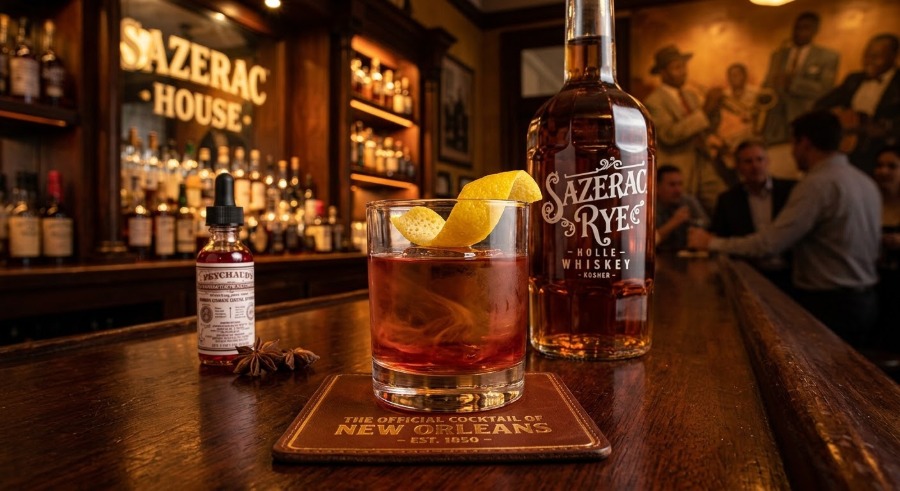
Few drinks in the world belong so completely to a single city as the Sazerac belongs to New Orleans. In 2008, the Louisiana Legislature made it official, naming the Sazerac the Official Cocktail of New Orleans.
Potent, herbal, and unapologetically bold, the Sazerac is not merely a drink; it is living history served in an Old Fashioned glass. For cocktail enthusiasts, historians, and travelers alike, a pilgrimage to New Orleans to taste an authentic Sazerac at the source is an essential cultural ritual.
1. The Anatomy of a Classic Sazerac
Unlike modern fruity or heavily sweetened cocktails, the Sazerac is minimalist, spirit-forward, and reliant on aromatic balance. It is composed of:
- Rye Whiskey (or Cognac in older styles): providing spicy warmth and structure.
- Peychaud’s Bitters: an essential bright red, gentian-and-anise bitter created in the city.
- A Sugar Cube (or simple syrup): to soften the edges.
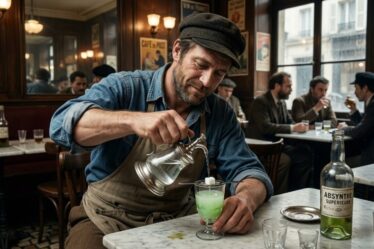
- An Absinthe Rinse: coating the inside of an ice-chilled glass before the mixed spirits are poured in, lending its unmistakable herbal aroma to the nose.
- Lemon Peel: expressed over the rim to release citrus oils and discarded—never dropped into the drink.
The result is a ruby-amber cocktail that hits the nose with licorice, citrus, and oak before delivering a dry, complex warmth on the palate.
2. The History: How an Apothecary Tonic Became America’s First Cocktail
The Sazerac’s roots stretch back to the 1830s in the heart of the French Quarter:
- Antoine Amédée Peychaud’s Apothecary: An apothecary on Royal Street began dispensing a secret family medicinal bitters recipe mixed with French brandy into an egg cup (coquetier—a word some lore suggests gave birth to the term “cocktail”).
- The Sazerac Coffeehouse: By the 1850s, John Schiller opened the Sazerac Coffee House on Exchange Alley, serving a concoction made specifically with an imported French cognac called Sazerac de Forge et Fils.
- The Rye Transition & The Absinthe Wash: In the late 1860s and 1870s, two events reshaped the drink forever. First, the phylloxera epidemic in Europe crippled French vineyards, drying up cognac supplies. Barkeep Thomas H. Handy substituted spicy American rye whiskey for brandy. Second, local bartenders introduced a wash of imported Swiss/French absinthe into the glass, completing the recipe known today.
- Surviving the Ban: When absinthe was banned in the U.S. in 1912, New Orleans bartenders substituted local anise liqueurs like Herbsaint or imported pastis. Since the lifting of the federal ban in 2007, authentic absinthe has reclaimed its traditional role.
3. Where to Experience the Sazerac in New Orleans
New Orleans treats the preparation of a Sazerac with reverence. Here are the top locations across the city where travelers can experience it at its finest:
The Sazerac Bar (The Roosevelt Hotel)
- Location: 130 Roosevelt Way (Central Business District / French Quarter adjacent)
- The Vibe: Pure 1930s Art Deco luxury. With warm African walnut paneling and historic Paul Ninas murals depicting old New Orleans life, this lounge was famously frequented by Governor Huey P. Long. Drinking a Sazerac here—prepared with Sazerac Rye and Herbsaint or absinthe—is one of the grandest cocktail rituals in America.
The Sazerac House
- Location: 101 Magazine St (Corner of Canal Street & Magazine)
- The Experience: Part working micro-distillery and part interactive museum, this restored historic building offers multi-floor immersive exhibits exploring the history of Peychaud’s bitters, absinthe, and cocktail culture. It even features an operational still producing small-batch Sazerac Rye on site.
The Carousel Bar & Lounge (Hotel Monteleone)
- Location: 214 Royal St (French Quarter)
- The Vibe: A whimsical, revolving 25-seat carousel bar built in 1949 that slowly rotates while you drink. Royal Street was the original neighborhood of Antoine Peychaud, making a Sazerac ordered here feel delightfully full-circle.
Jewel of the South
- Location: 1026 St. Louis St (French Quarter)
- The Vibe: Founded by celebrated bartender Chris Hannah, this 19th-century Creole cottage is hailed as one of the finest cocktail bars in the world. Here, you can sample hyper-refined Sazeracs, including traditional French brandy-based versions that pay homage to the pre-phylloxera 1850s recipe.
Old Absinthe House
- Location: 240 Bourbon St (French Quarter)
- The Vibe: Built in 1806, this corner tavern was a gathering point for pirates like Jean Lafitte and literary figures from Mark Twain to Oscar Wilde. While famous for its frosted Absinthe Frappé, ordering a Sazerac amidst its centuries-old cypress bar and antique water fountains connects you straight to 19th-century New Orleans tavern culture.
Columns
- Location: 3811 St Charles Ave (Uptown / Garden District)
- The Vibe: A stunning 1883 Italianate mansion overlooking the St. Charles streetcar line. Sipping a Sazerac on the sprawling veranda beneath historic live oaks offers a relaxed, atmospheric alternative to the bustling French Quarter.
4. Why Travel to New Orleans to Experience It?
You can order a Sazerac in London, Tokyo, or New York, but tasting it in New Orleans is an entirely distinct encounter.
- Context and Geography: A Sazerac belongs in the sultry, subtropical air of south Louisiana. The cold, heavy glass, the scent of lemon oils cut with sweet anise, and the lingering warmth of rye whiskey feel tailor-made for an evening beneath wrought-iron balconies and Spanish moss.
- Bartending as Heritage: In New Orleans, bartending has never been a temporary side job; it is a respected trade passed down through generations. Watching a veteran bartender chill two glasses, coat the rim with absinthe, and stir the rye over cracked ice with effortless grace turns the drink into live performance art.
- A Sensory Bridge to the Past: The Sazerac tells the entire story of New Orleans in four ingredients: French brandy and Caribbean bitters, American frontier rye, and European bohemian absinthe. Ordering one at a mahogany bar while brass jazz drifts in from the street allows you to drink the city’s history in its truest form.