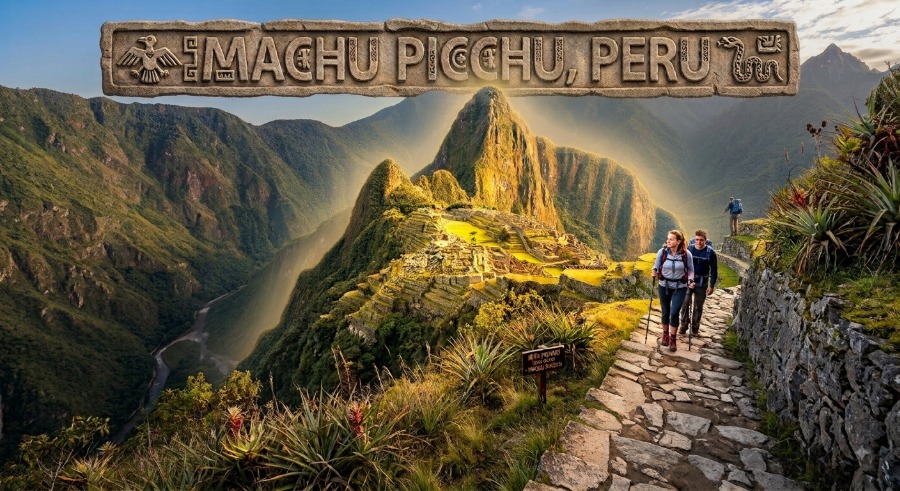
Tucked high above the Urubamba Valley in the Peruvian Andes, Machu Picchu stands as the pinnacle of 15th-century Inca civil engineering. While day-trippers arrive by train via Aguas Calientes, tackling the legendary Inca Trail (Camino Inca) offers the ultimate pilgrimage: four days of ancient stone pathways, misty cloud forests, and high Andean passes culminating in a sunrise arrival through the Sun Gate (Inti Punku).
The Classic 4-Day Route Breakdown
The standard trek covers approximately 42 km (26 miles), starting near Ollantaytambo at Km 82.
- Day 1 (Km 82 to Wayllabamba): Gentle warm-up along the Urubamba River with views of the Patallacta ruins.
- Day 2 (Wayllabamba to Pacaymayo): The most demanding leg, ascending 1,200 vertical metres to conquer Dead Woman’s Pass (Warmiwañusqa) at 4,215 metres above sea level.
- Day 3 (Pacaymayo to Wiñay Wayna): Traverses high cloud forests, navigating Inca stairways, tunnels, and dramatic ruins like Runkurakay, Sayacmarca, and Phuyupatamarca.
- Day 4 (Wiñay Wayna to Machu Picchu): Pre-dawn hike to Inti Punku for the iconic panoramic view over the lost citadel as the morning mist clears.
Essential Planning Guide
| Detail | Classic Inca Trail (4-Day) | Alternative Routes (Salkantay / Lares) |
|---|---|---|
| Permits | Mandatory limit (500/day, ~200 for hikers) | No trail permit caps (standard ruins ticket needed) |
| Booking Window | 6–8 months ahead (October release for next year) | 1–3 months in advance |
| Best Season | Dry season (May to September) | Dry season (May to September) |
| Citadel Entry | Direct access via Inti Punku (Sun Gate) | Train/bus from Aguas Calientes base |
| Trail Closure | Closed all February for maintenance | Open year-round (weather dependent) |
Key Trekker Tips
- Acclimatise First: Spend a minimum of 2 to 3 days in Cusco (3,400m) or the Sacred Valley before starting to prevent Acute Mountain Sickness (AMS).
- Passport Matching: Permits are strictly non-transferable and non-refundable; your passport number on your permit must match your physical passport at trail checkpoints.
- Pack Light: Porters typically carry sleeping bags and bulk camp gear, but you are limited to a 5–6 kg personal duffel bag plus your daypack.