You see that Peru sticker on my front? That was earned the hard way. Trekking the classic 4-day Inca Trail up to 4,215 meters (Dead Woman’s Pass) is one of the most rewarding journeys in the world, but it requires a very specific packing strategy.
Trekking in the Andes is not about bringing more gear—it’s about bringing the exact right gear.
1. The Two-Bag Strategy: Duffel vs. Daypack
On the trail, luggage works differently. You won’t be wheeling a suitcase through the mountains! Most hikers leave their main suitcase safely locked in Cusco and split their gear into two specific bags:
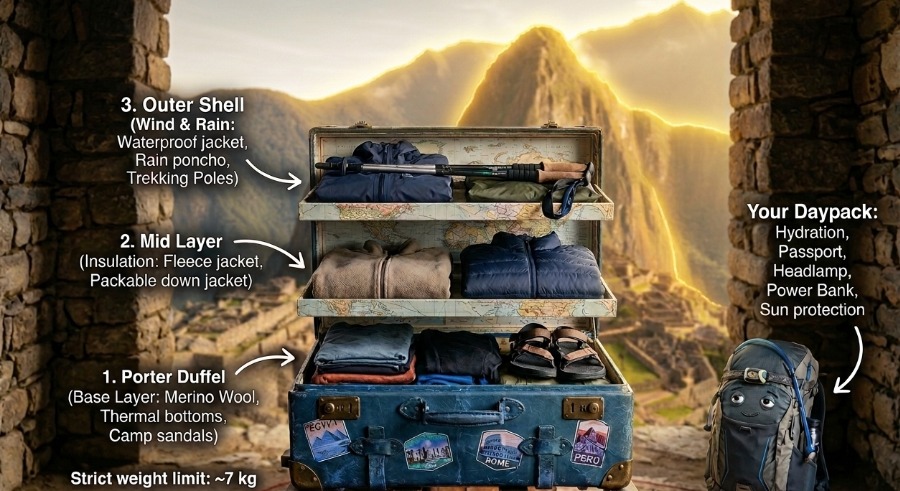
- The Porter Duffel (Strict Weight Limit: ~6–7 kg / 13–15 lbs):
- Trek operators provide a duffel bag carried by the porters from camp to camp.
- Crucial Rule: The weight limit usually includes your sleeping bag and mat (around 2.5–3 kg), leaving only 3.5–4.5 kg for your spare clothes, camp sandals, and toiletries.
- You will not have access to this bag during the day—it moves ahead to set up camp.
- Your Daypack (20L–30L):
- What you carry yourself on the trail.
- Must hold your daily hydration (2–3L bladder/bottles), rain jacket/poncho, sun protection, headlamp, passport, fleece layer, and snacks.
2. The Golden Rule of High-Altitude Clothing: Three Layers
Mountain weather swings dramatically from hot, sunny days (20°C+) to sub-zero nights.
- Base Layer (Moisture-Wicking): Merino wool or synthetic tops and thermal bottoms for cold nights at camp. Avoid cotton—it holds sweat and will make you freeze when you stop moving.
- Mid Layer (Insulation): A lightweight fleece jacket or packable down jacket.
- Outer Shell (Wind & Rain): A breathable waterproof jacket (GORE-TEX or similar) plus a rain poncho that fits over your daypack.
3. Non-Negotiable Essentials
- Broken-In Hiking Boots: The Inca Trail is made of thousands of uneven stone steps. Wear sturdy, waterproof hiking boots with ankle support that you have thoroughly tested before leaving home.
- Original Passport: You must show the exact passport used for your trail permit at the control checkpoints and the Machu Picchu entrance.
- Trekking Poles with Rubber Tips: Metal tips are strictly prohibited to protect the ancient Inca stone paths. Ensure your poles have rubber protectors.
- Dry Sacks / Waterproof Liners: Mountain downpours can soak through canvas duffels. Pack your sleeping bag and clothes inside sealed waterproof dry bags inside the duffel.
- Headlamp + Power Bank: There are no power outlets at campsites, and dawn departures (especially for the final hike to the Sun Gate) require hands-free light.
Miles’ Pro-Tip: “Bring a clean, fresh t-shirt and lightweight trousers sealed in a ziplock bag inside your duffel just for Day 4. When you arrive at the Sun Gate (Inti Punku) looking at Machu Picchu for the first time, you’ll be thrilled to have one fresh outfit for that iconic photo!”