From neon-lit Tokyo intersections and steaming bowls of tonkotsu ramen to quiet bamboo groves in Kyoto
, Japan is a bucket-list journey that blends ancient tradition with hyper-modern efficiency.
To help you navigate your first trip smoothly, here is everything you need to know about getting around, local etiquette, and packing smart.
1. Navigating Transit & Luggage
Japan possesses one of the world’s most punctual and interconnected rail networks, but getting the logistics right makes all the difference:
- IC Cards (Suica, Pasmo, ICOCA): Add a digital IC card to your smartphone wallet before you fly. These contactless cards allow you to tap into local metros, buses, and pay for snacks at vending machines and konbini (convenience stores) seamlessly.
- Shinkansen (Bullet Train) Luggage Limits: If your suitcase has total dimensions (length + width + height) exceeding 160 cm (63 inches), JR rules require you to reserve a specific seat with oversized baggage area in advance. Standard carry-on bags fit easily in overhead racks without reservation.
- Luggage Forwarding (Takkyubin): If you are moving between Tokyo, Kyoto, or Osaka, consider having your large bags shipped hotel-to-hotel overnight via Yamato Transport (the “Black Cat” service) so you can ride trains unencumbered.
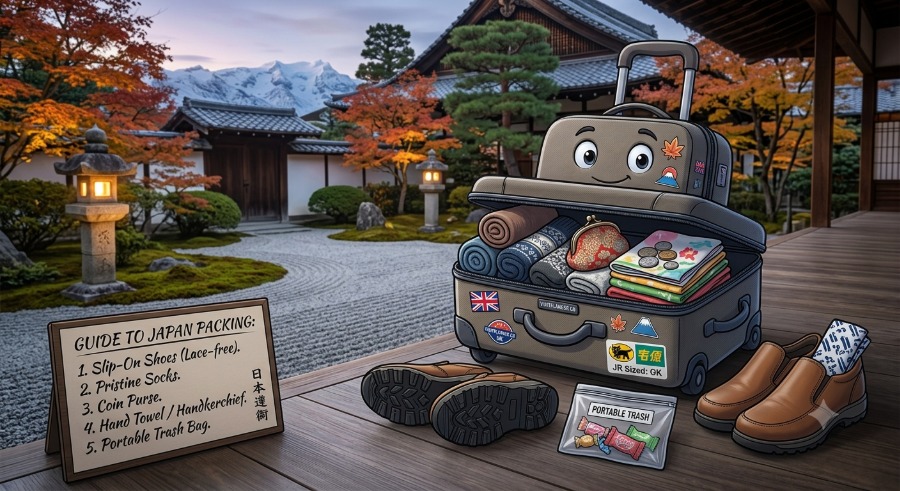
2. Practical Packing Essentials
| Item | Why You Need It |
|---|---|
| Slip-On Walking Shoes | You will easily log 15,000–20,000 steps a day, and shoes must be removed frequently at temples, traditional restaurants, and ryokans. |
| Pristine Socks | Since your footwear comes off often, pack clean, comfortable socks free of holes. |
| Coin Purse | Japan still uses physical cash for temple entries, small ramen stalls, and coin lockers; 100¥ and 500¥ coins accumulate fast. |
| Small Day Towel / Handkerchief | Many public restrooms provide high-tech toilets and air dryers, but paper hand towels are rare. |
| Portable Trash Bag | Public rubbish bins are scarce on city streets; carry a small pouch to hold your litter until you reach your hotel or a convenience store. |
3. Local Customs & Etiquette
- No Tipping: Tipping is not customary and can cause confusion or embarrassment. Outstanding service is standard everywhere.
- Train Etiquette: Keep mobile phones on silent (“manner mode”), avoid taking phone calls, and keep conversations at a whisper on public transit.
- Eating on the Move: Avoid walking down crowded streets while eating. Instead, finish snacks directly outside the shop or vending machine where you bought them.
- Cash Trays: When paying with cash or physical card, place your money into the small plastic tray provided at the register rather than handing it directly to the cashier.