
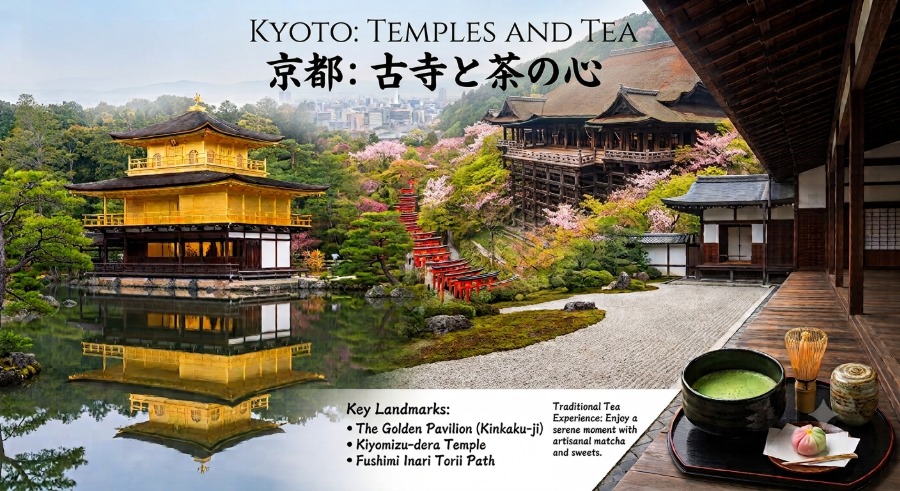
Kyoto is the cultural heartbeat of Japan, home to over 1,600 Buddhist temples, 400 Shinto shrines, and a centuries-old tradition of chanoyu (the Way of Tea). Where Tokyo moves at lightning speed, Kyoto invites you to slow down, listen to wooden temple floors creak underfoot, and savor the rich umami of freshly whisked matcha.
⛩️ Must-Visit Temples: The Core Circuit
To avoid “temple fatigue,” focus on sites that offer distinct architectural styles, gardens, and spiritual histories.
- Kinkaku-ji (The Golden Pavilion): The top two floors are completely covered in gold leaf, casting reflections across the surrounding mirror pond. Visit right at opening (9:00 AM) to beat tour buses.
- Kiyomizu-dera: Perched on Mount Otowa, this wooden temple is built without a single nail. The main hall’s wooden stage delivers panoramic views of Kyoto across maple and cherry trees.
- Fushimi Inari-Taisha: Famous for its mountain path lined with thousands of vermilion torii gates. The lower section is crowded, but hiking 30–45 minutes up the mountain rewards you with peaceful, secluded shrines.
- Ryoan-ji: Japan’s most celebrated Zen dry-landscape (karesansui) rock garden. Fifteen stones are arranged so that from any vantage point on the veranda, at least one remains hidden from view.
- Tenryu-ji (Arashiyama): Backing directly onto the famous Arashiyama Bamboo Grove, its 14th-century landscape garden remains virtually intact from its original design.
🍵 The Way of Tea (Chanoyu)
Kyoto’s proximity to Uji—the birthplace of Japanese green tea cultivation—makes it the definitive place to experience an authentic tea ceremony.
- The Experience: A ritualized preparation of usucha (thin, frothy matcha) paired with a seasonal wagashi (sweet confection). The sweet is eaten first to balance the tea’s natural bitterness.
- Where to Book: Reserve a session in a traditional machiya (wooden townhouse) in Higashiyama or Gion (such as Camellia Tea House or Tea Ceremony Koto). Private sessions offer a deeper dive into philosophy, while small group sessions run around 45–60 minutes.
- Historic Tea Shops: Stop by Ippodo Tea Co. (operating since 1717) on Teramachi Street or Ryūōen Chaho near Nijo to sample roasted hojicha and high-grade ceremonial matcha to bring home.
📋 Practical Visit Planner
| Detail | Recommendation |
|---|---|
| Ideal Duration | 3 to 4 full days |
| Best Base Areas | Shimogyo / Karasuma (central transit hub) or Gion / Higashiyama (historic atmosphere) |
| Getting Around | Use the Kyoto Subway and JR lines combined with walking or short taxi hops. Avoid buses during peak morning/evening hours due to heavy road congestion. |
| Tea Ceremony Etiquette | Wear clean white socks or tabi (bare feet are frowned upon on tatami). Rotate your bowl twice clockwise before drinking to avoid placing your lips on the front design. |
| Local Etiquette | Private side streets (shido) in Gion are strictly off-limits for photography. Always step aside for geiko and maiko without approaching or obstructing them. |
Visiting Japan: The Essential First-Timer’s Travel Guide