Monument of Excess and Empire: Inside Blenheim Palace
Tucked away in the rolling hills of Woodstock, Oxfordshire, stands a structure that tests the very definition of a house. Blenheim Palace is a breathtakingly massive 18th-century country house, unique for one striking distinction: it is the only non-royal, non-episcopal (not belonging to a bishop) residence in England to hold the title of “Palace.”
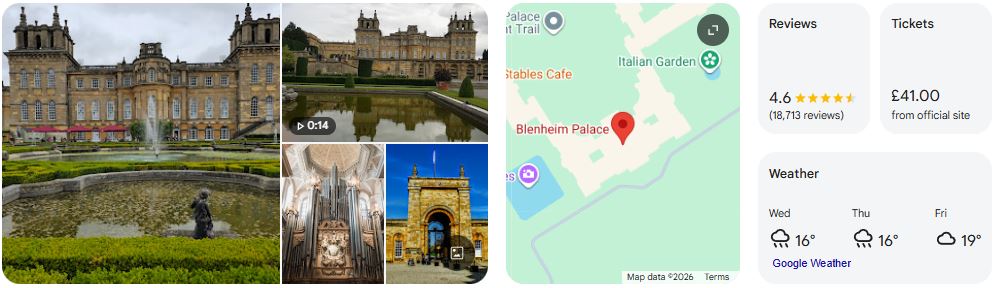
Built between 1705 and 1722, Blenheim was conceived not just as a home, but as a monument to national pride, military dominance, and a rather complicated royal friendship. Today, it stands as a UNESCO World Heritage Site and a premier window into British history.
A Thank You Gift with String Attached
The story of Blenheim Palace begins on the battlefields of Bavaria. In August 1704, John Churchill, the 1st Duke of Marlborough, led an allied army to a decisive victory against the French and Bavarians at the Battle of Blenheim. It was a massive turning point in the War of the Spanish Succession, shattering the myth of French military invincibility.
A deeply grateful Queen Anne, along with a passionate Parliament, decided to reward Churchill with a grand gesture: the royal manor of Woodstock and the funds to build a monumental estate.
However, the gift came with a catch. The land technically remains Crown property. To this day, the Duke of Marlborough must pay a “peppercorn rent” to the reigning monarch every single year. The payment? A replica of the captured French royal standard, delivered to Windsor Castle on or before August 13th—the anniversary of the battle. If the family ever forgets, the palace legally reverts to the Crown.
Architectural Warfare
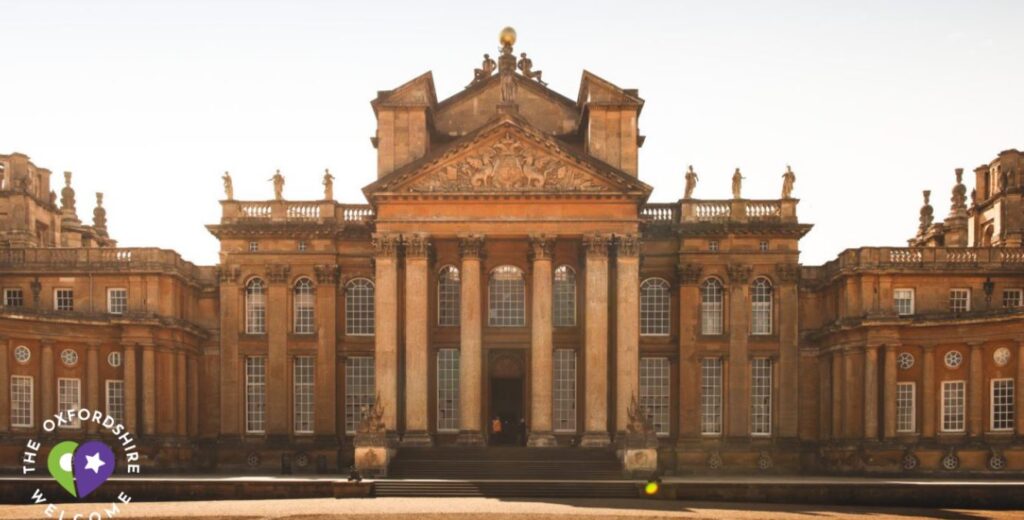
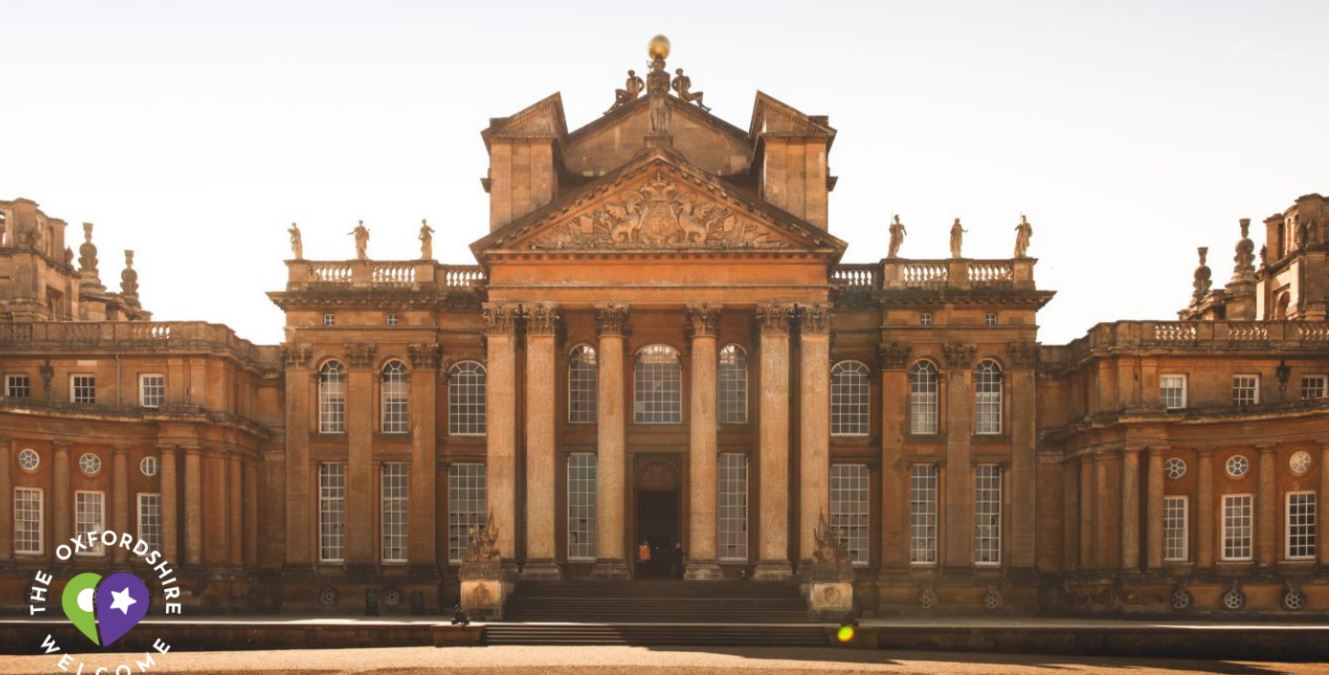
To design this monument, the Duke bypasses the reliable, classic choices of the era (like Sir Christopher Wren) and hires Sir John Vanbrugh, a playwright turned self-taught architect. Vanbrugh, alongside assistant Nicholas Hawksmoor, designed Blenheim in the flamboyant English Baroque style.
The architecture is theatrical, heavy, and intentionally intimidating. It relies on massed stone, dramatic pillars, and soaring towers designed to mimic a fortress as much as a home. The windows were even sized by hierarchy—grand, sweeping panes for the family, and tiny, cramped slits for the servants.
The construction, however, became an absolute nightmare:
-
Political Fallout: The Duke’s fiercely strong-willed wife, Sarah Jennings, hated Vanbrugh’s extravagant designs and constantly clashed with him.
-
Funding Dried Up: In 1711, Sarah had a permanent falling out with Queen Anne. The royal funds abruptly stopped, forcing the Marlboroughs into temporary exile and leaving local masons unpaid.
-
The Aftermath: The palace was eventually finished out of the Duke’s own pocket. Vanbrugh’s reputation was so battered by the dramatic overspends that he was banned from the property and never received another major public commission.
The Birth of a Legend
While the palace belongs to the Spencer-Churchill line, its most famous resident wasn’t a Duke. On November 30, 1874, Sir Winston Churchill was born here unexpectedly, arriving several weeks early during a family visit.
Churchill maintained a lifelong love affair with the estate. He spent much of his childhood roaming its halls, used its extensive archives to write histories of his military ancestor, and successfully proposed to his wife, Clementine Hozier, in the park’s Temple of Diana in 1908.
Inside the Gilded Walls
Stepping inside the palace reveals a landscape of sheer opulence, featuring over 200 rooms and 1,000 windows. The Great Hall features an intricately painted ceiling by Louis Laguerre, depicting the 1st Duke pointing to a map of his battle victories.
Perhaps the most awe-inspiring interior space is the Long Library. Stretching across an entire wing of the palace, it houses more than 10,000 historic books and is anchored by the massive, historic Willis pipe organ.
Saved by American Wealth
By the late 19th century, agricultural depressions left the Marlborough family on the brink of financial ruin. The palace was rapidly deteriorating.
The solution came in 1895 via a practical, if unhappy, arrangement. Charles Spencer-Churchill, the 9th Duke, traveled to America in search of a “Dollar Princess”—a wealthy American heiress whose family would trade cash for a British title. He married Consuelo Vanderbilt, daughter of the American railroad tycoon William Kissam Vanderbilt.
Consuelo brought an astronomical marriage settlement of roughly $2.5 million (hundreds of millions in today’s money). Though the marriage was notoriously loveless and eventually ended in divorce, her fortune entirely rebuilt Blenheim, funding massive structural restorations and the creation of the stunning formal water terraces that exist today.
The 2,000-Acre Masterpiece
The palace itself is only half the draw; it sits nestled within 2,000 acres of parkland designed by the legendary landscape architect Lancelot “Capability” Brown.
Brown completely reimagined the wild, structured grounds by damming the local River Glyme to create two massive, naturalistic lakes. He seamlessly integrated the Grand Bridge (originally built over a tiny stream by Vanbrugh, who had envisioned an indoor canal system inside it) into a sweeping water landscape that is widely considered one of the finest views in England.
Today, Blenheim Palace functions as a complex hybrid: it is a deeply treasured national monument, a bustling tourist destination, and a private family home where the 12th Duke of Marlborough and his family still reside.