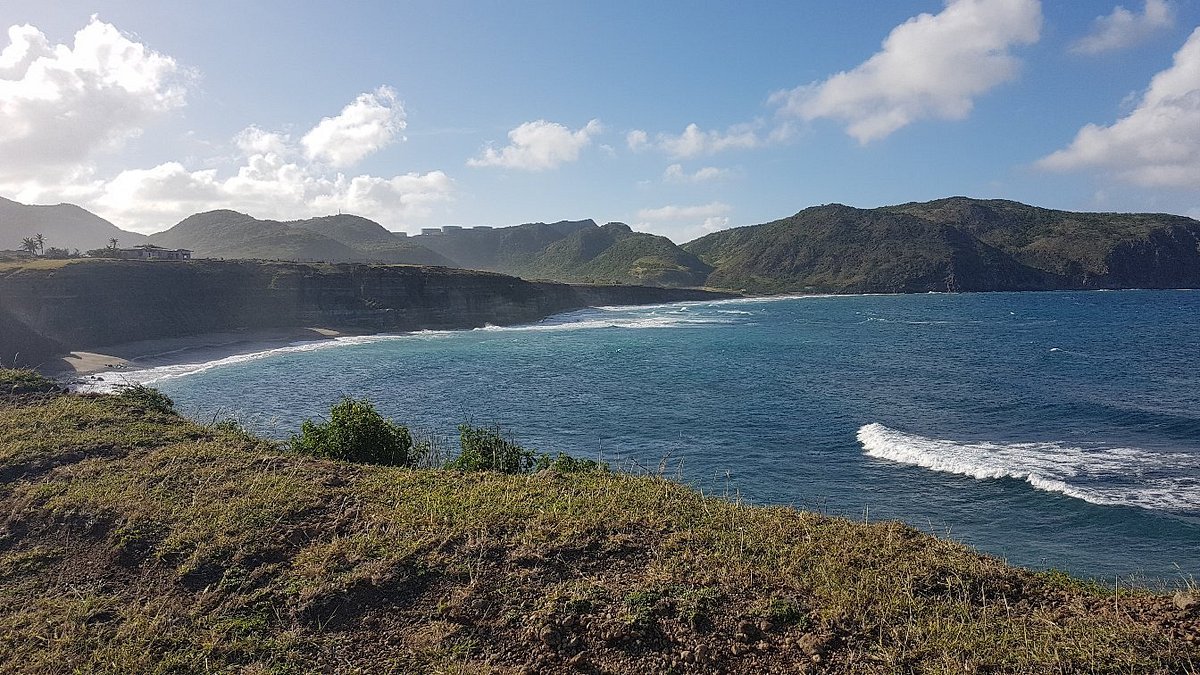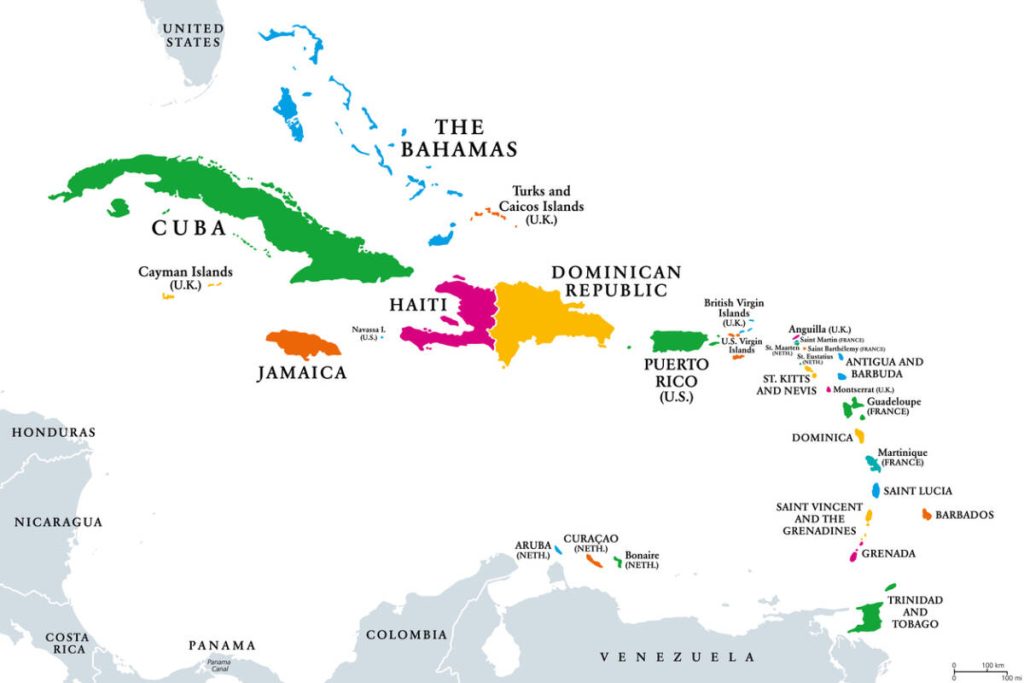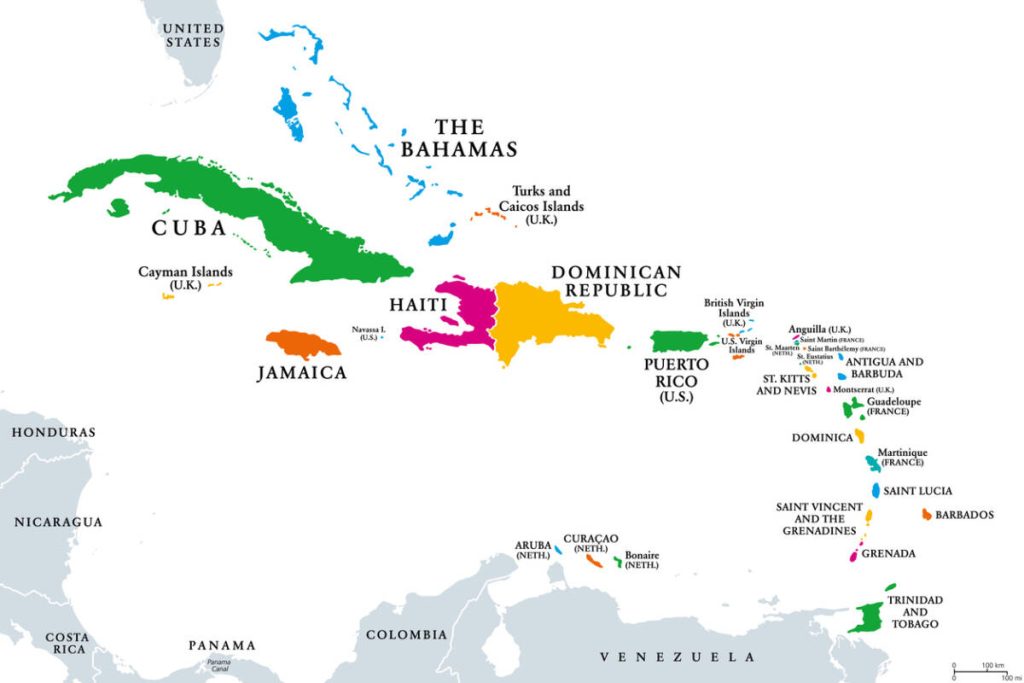
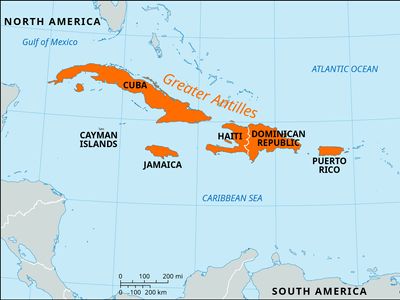
The Greater Antilles is a spectacular archipelago in the Caribbean Sea, comprising the region’s largest and most populous islands. Representing roughly 90% of the land area of the entire West Indies, these islands are not just geographic giants but also cultural and historical powerhouses.
1. The Major Islands
The Greater Antilles consists of four main islands, which are divided into five sovereign nations and one major US territory.
Cuba Cuba The largest island in the Caribbean; famous for its Spanish colonial architecture and revolutionary history.
Hispaniola Haiti & Dominican Republic The second-largest island, shared by two distinct cultures: French/Creole-speaking Haiti and Spanish-speaking Dominican Republic.
Jamaica Jamaica Known globally for its reggae music, Blue Mountain coffee, and lush tropical rainforests.
Puerto Rico Puerto Rico (USA) A vibrant US territory blending Taino, Spanish, and African influences with a modern economy.
Cayman Islands Cayman Islands (UK) Often included in the group, these are known for world-class diving and international finance.
2. Geography and Geology
Unlike the Lesser Antilles to the east, which are largely volcanic and “younger,” the Greater Antilles are composed of ancient continental rock. Geologists believe these islands are the summits of a submerged mountain chain connected to the mountain systems of Central America.
- Diverse Landscapes: The islands feature a dramatic mix of rugged mountain ranges—such as the Sierra Maestra in Cuba and the Cordillera Central in the Dominican Republic (home to Pico Duarte, the Caribbean’s highest peak)—and fertile coastal plains.
- Climate: The region enjoys a tropical climate, though it is tempered by steady trade winds. The islands are also located within the Atlantic hurricane belt, which significantly influences local architecture and agriculture.
3. A Complex History
The history of the Greater Antilles is a tapestry of indigenous resilience, colonial conquest, and the struggle for sovereignty.
- Indigenous Roots: Before European arrival, the islands were inhabited by the Taíno people. While their population was decimated by colonization, their legacy lives on in Caribbean food, language (words like barbecue, hurricane, and tobacco), and DNA.
- Colonial Era: Christopher Columbus first landed here in 1492. For centuries, the islands were the “jewels” of European empires (Spain, France, and Britain), largely due to the lucrative—and brutal—sugar and tobacco plantation economies fueled by enslaved Africans.
- Independence: The 19th and 20th centuries saw a wave of independence movements. Haiti became the world’s first black-led republic in 1804 after a successful slave revolt, followed much later by the independence of the Dominican Republic, Cuba, and Jamaica.
4. Culture and Economy
The Greater Antilles is one of the most culturally diverse regions on Earth. The blend of African, European, and Indigenous traditions has birthed global phenomena in music and dance, from Salsa and Meringue to Reggae and Son.
- Economy: While historically reliant on sugar and tobacco, modern economies are driven by tourism, mining (like bauxite in Jamaica), and finance.
- Biodiversity: Because of their size and varied elevations, these islands are “biodiversity hotspots,” hosting thousands of species of plants and animals found nowhere else on Earth