Mexico City (CDMX) does not merely serve food; it operates as an open-air culinary theatre where ancient Aztec traditions, Spanish colonial trade, and modern cosmopolitan ambition collide. Built on the high-altitude bed of historic Lake Texcoco, Mexico’s capital has turned sustenance into an art form recognized globally by UNESCO and Michelin inspectors alike.
The Street Food Spectrum
Street food (antojitos callejeros) anchors daily life for millions across the megalopolis. Sidewalks are lined with stainless-steel carts, comals, and the rhythmic sound of masa slapping against timber presses.
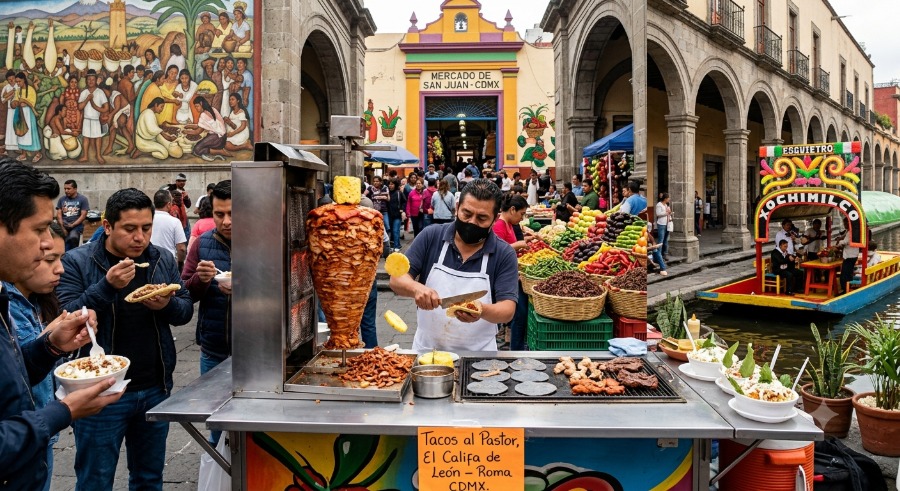
- Tacos al Pastor: Born from Lebanese immigrant communities in the mid-20th century who brought vertical spit-roasting techniques, pork is marinated in achiote and chiles, carved thinly onto corn tortillas, and topped with cilantro, diced onion, and a flick of pineapple.
- Ancestral Maize Vessels: Tlacoyos (oval blue-corn cakes stuffed with refried beans, fava beans, or requesón) and quesadillas filled with delicate flor de calabaza (squash blossoms) or huitlacoche (corn truffle) trace directly to pre-Hispanic street markets.
- Corn Off the Cob: Vendors serve elotes (charred ears slathered in mayonnaise, cotija cheese, lime, and chile powder) alongside steaming pots of esquites simmered with fragrant epazote herbs.
- The No-Frills Taquería: Tiny institutions like the tiled, standing-room-only El Califa de León prove that exceptional meat—seared quickly on an ultra-hot griddle with a squeeze of lime—commands global culinary acclaim.
The Fine Dining Vanguard
Mexico City sits firmly among the world’s foremost gastronomic capitals, celebrated for pairing hyper-local indigenous biodiversity with vanguard culinary technique.
- Pujol: Enrique Olvera’s flagship restaurant in Polanco reimagined Mexican fine dining on the international stage. Its signature dish—a circle of fresh mole nuevo plated inside an aged, dark mole madre simmered continuously for thousands of days—showcases the dynamic depth of traditional sauces.
- Quintonil: Helmed by Jorge Vallejo and Alejandra Flores, Quintonil champions sustainability and endemic ingredients, from seasonal braised greens to escamoles (ant larvae) and charred habanero reductions.
- Neighborhood Bistros: Establishments across Roma and Condesa, like Elena Reygadas’s Rosetta and Eduardo García’s Máximo, weave artisanal baking and French bistro discipline together with native Mexican heirloom produce.
Markets: The City’s Lifeline
To understand the food, one must explore the labyrinthine municipal markets (mercados):
- Central de Abasto: Covering over 800 acres, it is the largest wholesale food market on Earth, handling tens of thousands of tonnes of fresh chiles, herbs, cheeses, and produce daily to feed the city’s 20-plus million residents.
- Mercado de Jamaica: Famed primarily for its 24/7 blanket of fresh cut flowers, Jamaica also houses regional food halls serving green chorizo, fresh tamales, and slow-braised carnitas.
- Mercado de San Juan: The destination for rare regional delicacies, artisan cheeses, cured meats, and edible insects (chapulines and chicatanas).
Culture Beyond the Plate
Mexico City’s food cannot be separated from its cultural canvas:
- The Muralist Legacy: Murals by Diego Rivera, David Alfaro Siqueiros, and José Clemente Orozco adorn the walls of the Palacio Nacional and the Palacio de Bellas Artes, documenting the agrarian battles and indigenous histories that safeguard Mexico’s agricultural identity.
- Coyoacán’s Bohemian Heritage: Cobblestone streets, leafy plazas, and the cobalt-blue walls of the Museo Frida Kahlo preserve the artistic, intellectual counterculture that celebrated folkloric roots.
- Xochimilco’s Floating Gardens: Cruising on flat-bottom trajineras along surviving Aztec canals offers a glimpse into the chinampa system—an ingenious agricultural method of raised-bed farming built on shallow lake beds that continues to supply high-end restaurants with organic greens.